
March 1, 2025
Importance of H1 tags for SEO
Learn why H1 tags matter for search engines, user experience, keyword focus, and page structure.
When it comes to optimizing your website for search engines, every little detail counts. One of the most crucial elements in this optimization process is the H1 tag. In this article, we will explore why H1 tags are important for SEO and how they can impact your website's visibility.
What is an H1 tag?
The H1 tag is an HTML element that defines the main heading of a webpage. It is typically the first thing that visitors see when they land on your page. Think of it as the title of a book; it gives readers a clear idea of what the content is about.
H1 tag is the place where you will place your primary keyword.
Why are H1 tags important for SEO?
- Search engine understanding:H1 tags help search engines understand the main topic of your page. When search engines crawl your site, they look for H1 tags to determine the content's relevance to specific search queries.
- User experience: A clear and descriptive H1 tag enhances user experience. When visitors see a relevant heading, they are more likely to stay on your page and engage with the content.
- Keyword optimization: Including relevant keywords in your H1 tag can boost your SEO efforts. Use keywords naturally and avoid keyword stuffing.
- Content hierarchy: H1 tags establish a content hierarchy on your webpage. They indicate the primary focus of the page, while other heading tags can be used for subheadings.
How to find H1 tags
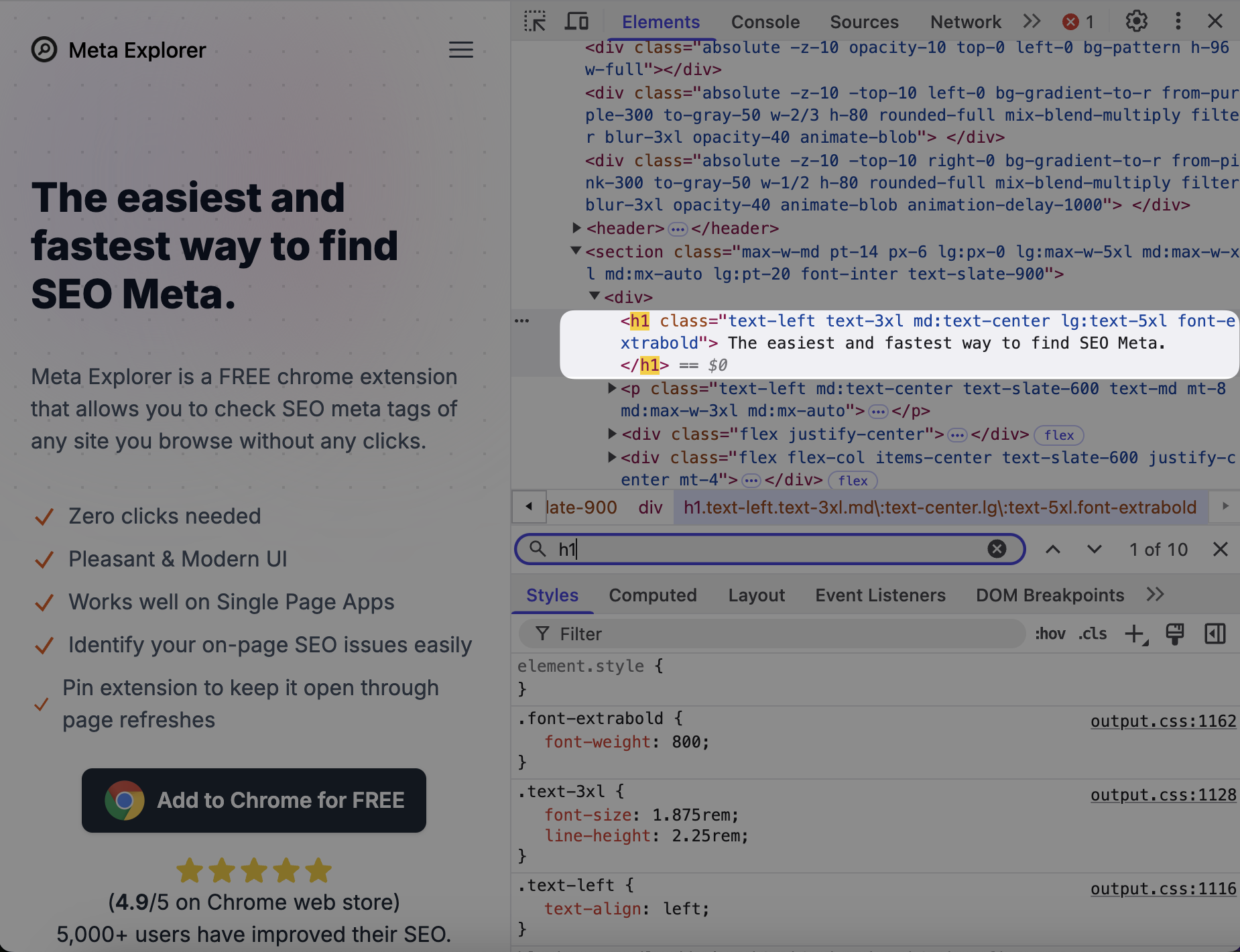
You can check by looking into the page source and searching for the <h1> HTML tag, or you can use a Chrome extension that provides more details.
Right click in the page and select inspect. In the developer tools window, select the Elements tab and search for H1.
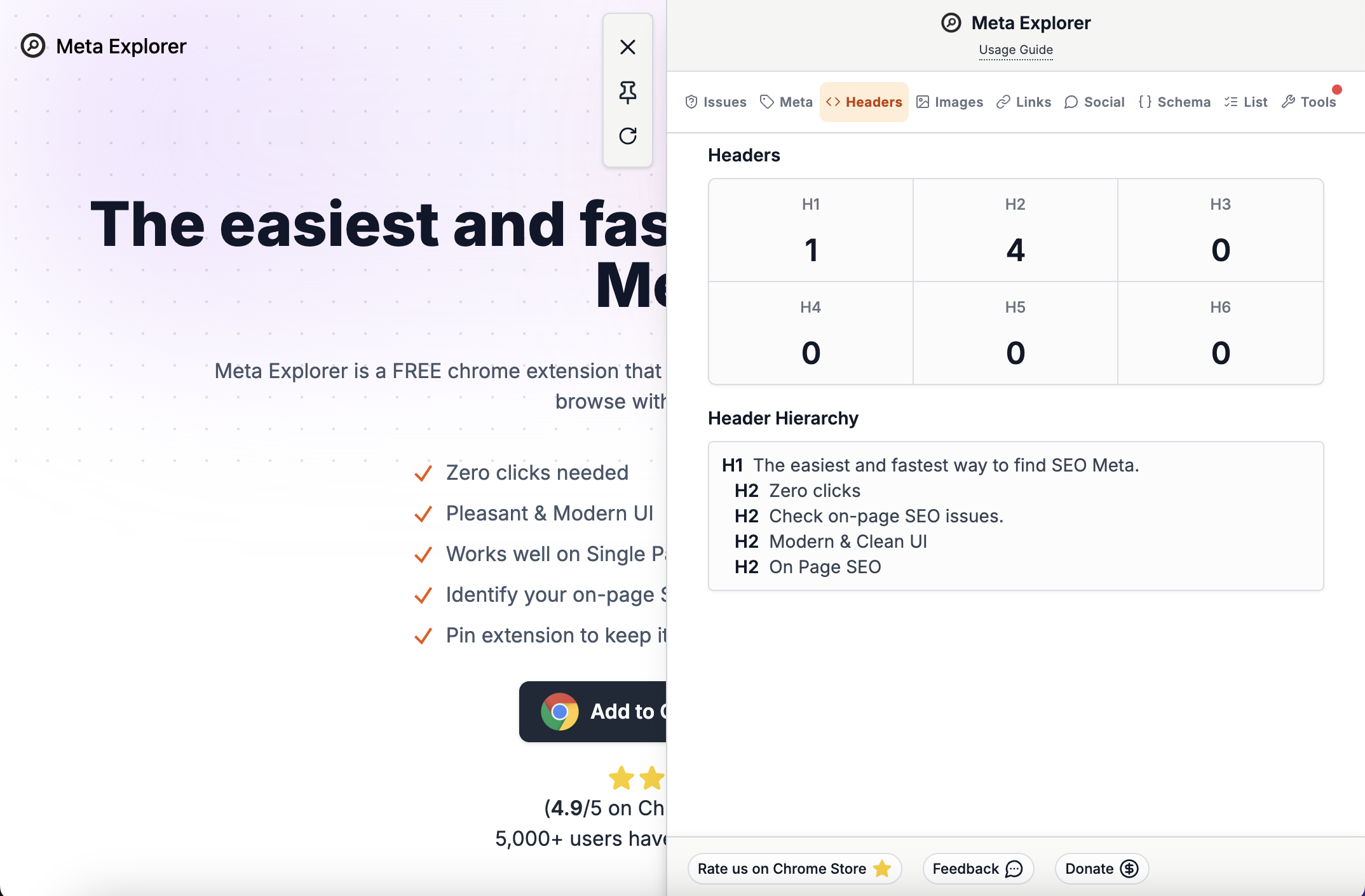
You can also use the Meta Explorer Chrome extension to find the H1 tag in the current page. Install and open the extension, then navigate to the headers tab. You will find the H1 tag count, the H1 text, and the header hierarchy.
Best practices for H1 tags
- Use one H1 tag per page: Each page should have only one H1 tag to avoid confusion for search engines.
- Keep it concise: Aim for a clear H1 tag, ideally between 20 and 70 characters.
- Include keywords: Incorporate relevant keywords, but make sure the H1 tag reads naturally.
- Make it engaging: Write an H1 tag that captures attention and encourages readers to continue.
Conclusion
H1 tags play a vital role in SEO by helping search engines understand your content, improving user experience, and establishing a clear content hierarchy. A well-optimized H1 tag is just one piece of the SEO puzzle, but it is an essential one.